Understanding FCEV Hydrogen Service Bays
Why fuel cell electric vehicles require a fundamentally different service environment.
Published by Hydrogen Service Bays by Marathon Finishing Systems
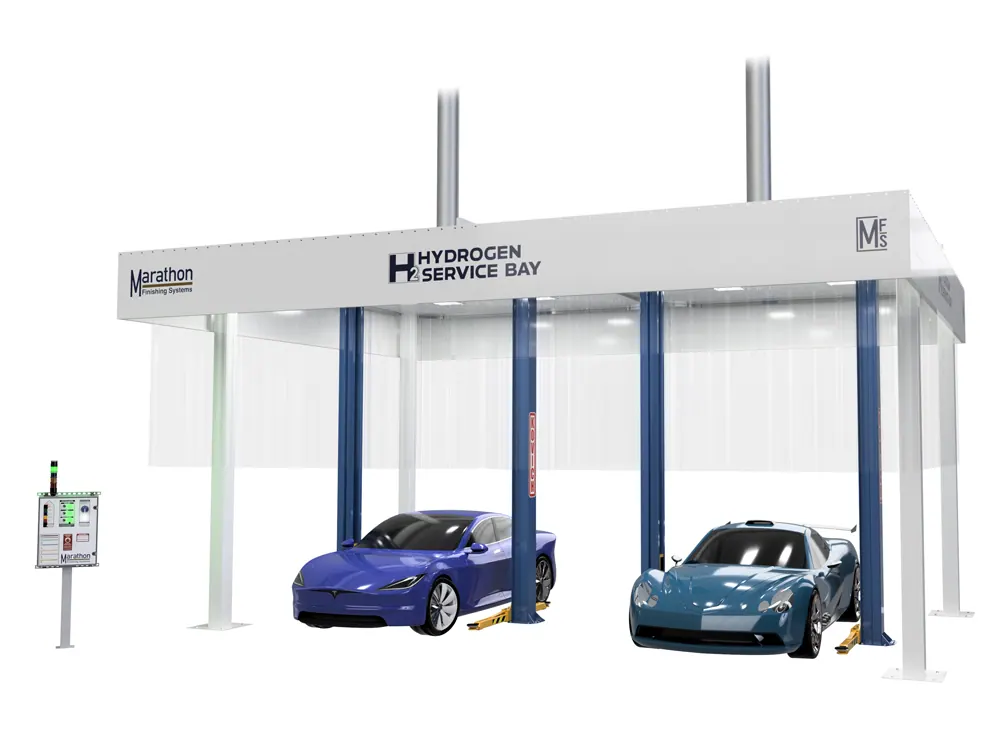
A hydrogen service bay is an engineered maintenance environment for fuel cell electric vehicles (FCEVs). It coordinates hydrogen detection, capture, ventilation, alarms and equipment interlocks around the vehicle, the facility and the work technicians perform. The design must support the vehicle manufacturer’s procedures and project-specific approval requirements.
The Rise of the Fuel Cell Electric Vehicle
Hydrogen fuel cell vehicles — also known as Fuel Cell Electric Vehicles, or FCEVs — use hydrogen to generate electricity for propulsion, with zero tailpipe emissions. They bring specific requirements for the maintenance and service providers who keep them on the road.
But servicing an FCEV is not the same as servicing a standard internal-combustion vehicle, and the facility itself plays a central role in keeping technicians safe.
How an FCEV Actually Works
An FCEV stores hydrogen in onboard tanks and supplies it to a fuel cell stack. Instead of burning the hydrogen for propulsion, the stack combines hydrogen with oxygen from the air to generate electricity for the vehicle’s electric motors. Water and heat are produced by the reaction.
Why FCEV Repair Is Different
Hydrogen is flammable and can ignite if it comes into contact with an electrical spark. That is what makes specialized infrastructure essential before any technician begins work.
Hydrogen gas is much lighter than air and tends to rise when released. Ceiling geometry, roof pockets, obstructions and airflow can influence where it collects. The bay enclosure, detection locations and ventilation strategy need to be evaluated together rather than copied from a conventional vehicle repair area.
The Service Process Itself
Before any work on the fuel system, technicians follow the vehicle manufacturer's procedure for defueling or isolating the hydrogen system. Marathon designs each bay to support that procedure, including a defuel vent line routed outdoors where the project requires one.
The planned service tasks determine the facility requirements. Work involving the hydrogen fuel system can require dedicated safeguards, equipment classification and ventilation. Marathon coordinates the proposed bay design with the project team and the codes adopted by the local Authority Having Jurisdiction.
The Bottom Line for Operators
The requirements for safely servicing FCEVs are highly specific. As FCEV adoption continues to spread across the country, the importance of having a dedicated, code-compliant H₂ service bay only grows. Installing one prepares your dealership or repair facility to safely capture this work — and to do it in a way that protects every technician on the floor.
Hydrogen safety references and planning limits
For background on hydrogen properties, detection and facility safety, consult the resources below. These references do not approve a particular installation. Use the codes adopted by your jurisdiction, the approved project design and the vehicle manufacturer’s service procedures.
- U.S. Department of Energy Hydrogen Program — safety resources
- H2Tools — hydrogen safety information and best practices
- NFPA 2 — Hydrogen Technologies Code information
Planning information from Hydrogen Service Bays, a specialty brand of Marathon Finishing Systems, Inc. About the manufacturer.
Discuss your facility
Our engineering team is ready to evaluate your specific service bay requirements.
Contact an Engineer