01 — How FCEVs Work
Pollution-Free Power
FCEVs use stacks of fuel cells that combine hydrogen with oxygen from the air to produce electricity, which then powers the vehicle's electric motors. The only byproduct is water — zero tailpipe emissions.
Marathon Automotive FCEV Hydrogen Service Bays create a focused service environment for hydrogen-powered passenger vehicles. The bay coordinates hydrogen detection, upward airflow, containment, exhaust, alarms, interlocks and controls around the vehicle and the approved maintenance workflow.
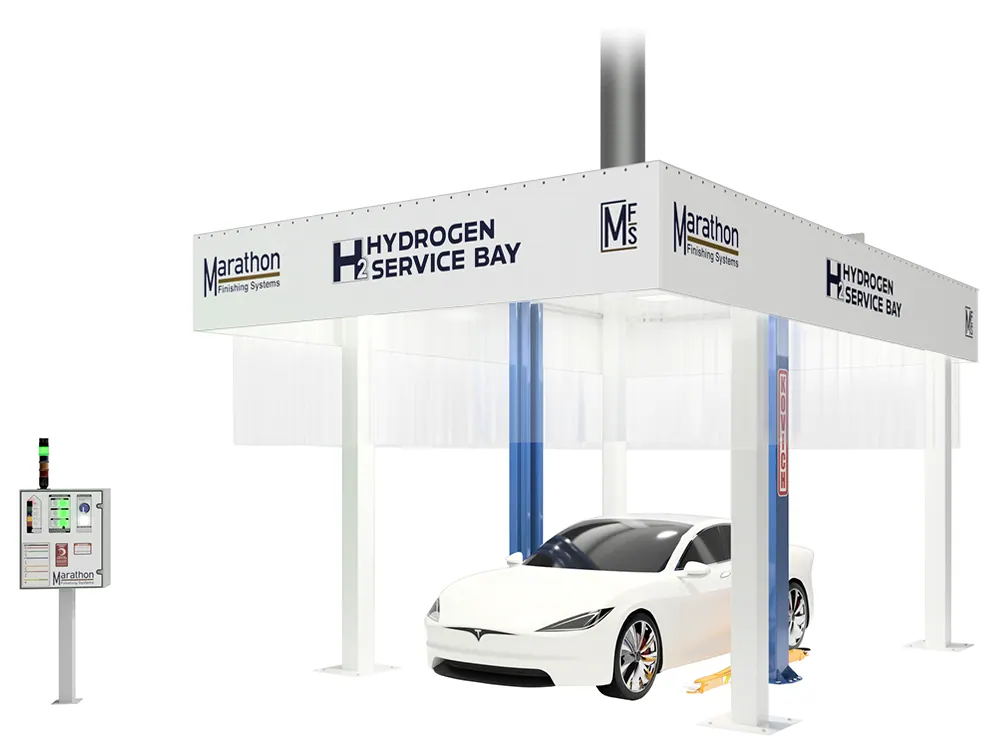
Single, double, and custom configurations — each engineered around your vehicles, throughput, and facility footprint.
An Automotive FCEV Hydrogen Service Bay creates a purpose-built working environment designed to manage hydrogen risk through coordinated engineering controls — so your team can focus on the service work.
Need something larger? Explore our Truck & Equipment and Bus & Fleet FCEV Hydrogen Service Bays.
Get a Quote Now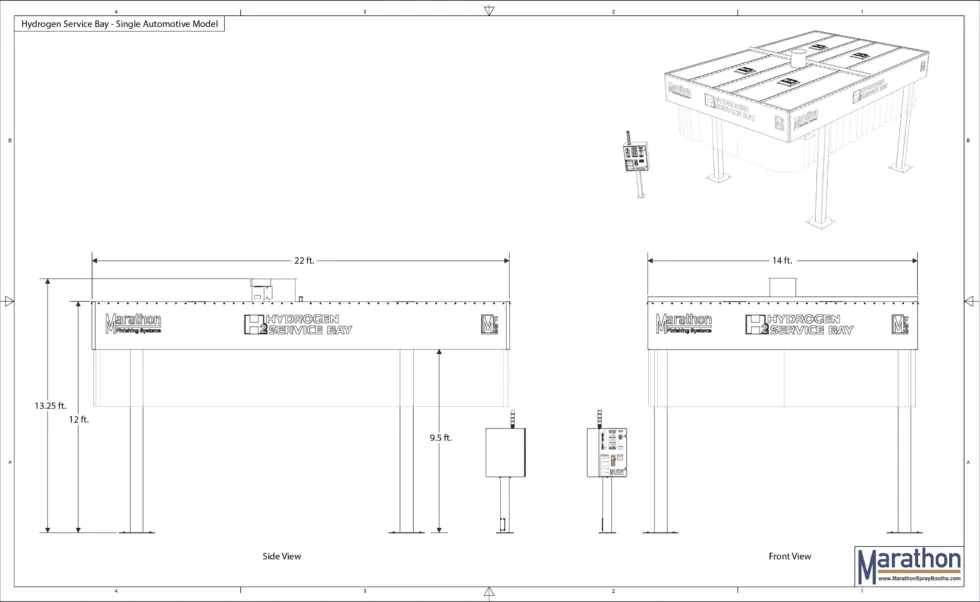
14.5 ft W × 12 ft H × 22.5 ft L
Custom dimensions are available to fit the vehicle envelope, service process and facility.
Features & Components: steel capture hood with bolted construction; fire-retardant perimeter curtain or fully enclosed walls; RKI Instruments hydrogen detection; spark-resistant exhaust fans with automatic purge; visual and audible alarms; hazardous location rated lighting. Final components are configured to your application and local requirements.
Marathon engineers and manufactures the Hydrogen Service Bay system, coordinates the controls and ventilation package, and supports installation and commissioning according to the approved project scope. Facility work, utilities, permitting, fire protection, roof work and trade responsibilities are identified in the proposal so every party knows what is included before the project begins.
Need engineering? Marathon works with licensed engineering partners who can provide site surveys, mechanical, electrical and fire protection design, professionally stamped drawings, and third-party commissioning. Permitting remains the responsibility of the owner or their contractor.
Commissioning verifies the installed system functions included in Marathon’s approved scope, including applicable detection, alarm, ventilation, interlock and control responses. Designated facility personnel receive an operational handoff covering the bay controls and normal system indications. Vehicle service procedures, emergency-response planning and technician qualification remain governed by the vehicle manufacturer, facility safety program and applicable authorities.
Each Hydrogen Service Bay is engineered for the codes adopted for the project location and coordinated with the local Authority Having Jurisdiction (AHJ). Depending on the project scope, applicable requirements may include NFPA 2, NFPA 70, the International Fire Code, International Building Code, International Mechanical Code, and OSHA requirements. Final requirements are project- and jurisdiction-specific.
FCEVs offer terrific benefits for consumers and unique opportunities for service providers — when handled with the right infrastructure.
FCEVs use stacks of fuel cells that combine hydrogen with oxygen from the air to produce electricity, which then powers the vehicle's electric motors. The only byproduct is water — zero tailpipe emissions.
Before service begins, technicians must follow the vehicle manufacturer’s procedures and the facility’s approved plan for shutdown, defueling or isolation, purging when required, and verification of a safe state. Marathon designs the service environment to support the approved workflow; the exact procedure remains vehicle- and project-specific.
Unlike petroleum, hydrogen is lighter than air — if released, it rises and pools at the ceiling. The capture hood and enclosure direct released hydrogen to the exhaust, away from building lights and wiring.
The requirements for servicing hydrogen-powered FCEVs are highly specific. A dedicated H₂ service bay coordinates detection, airflow, alarms and interlocks as one engineered response to manage hydrogen risk during standard maintenance — preparing your dealership or repair facility for the growth of fuel cell vehicles.
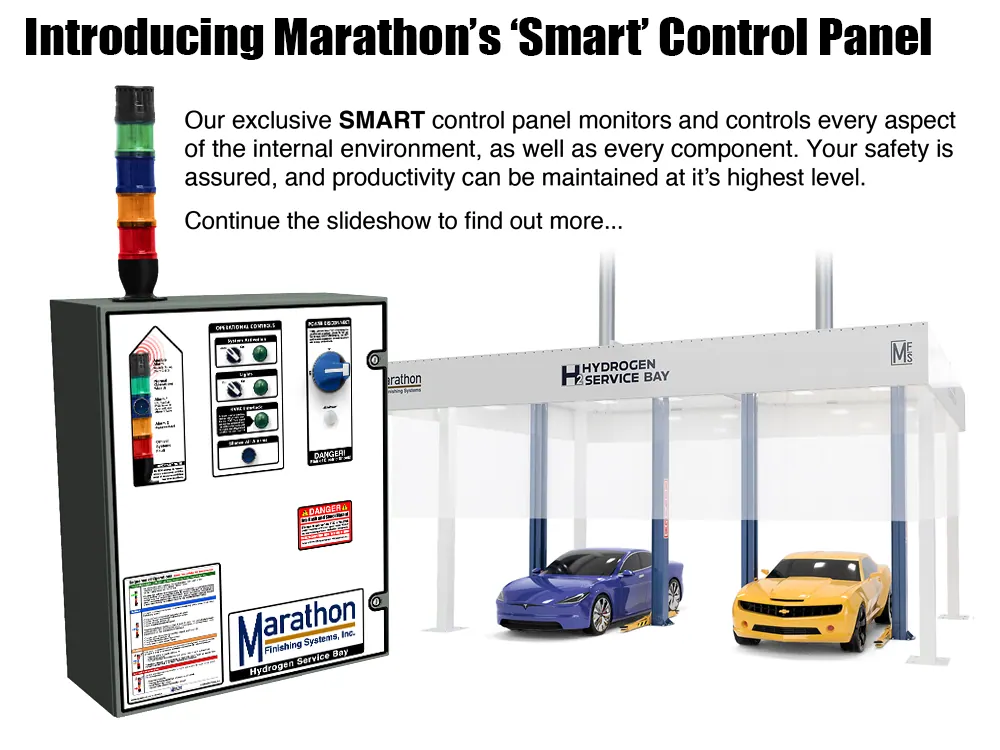
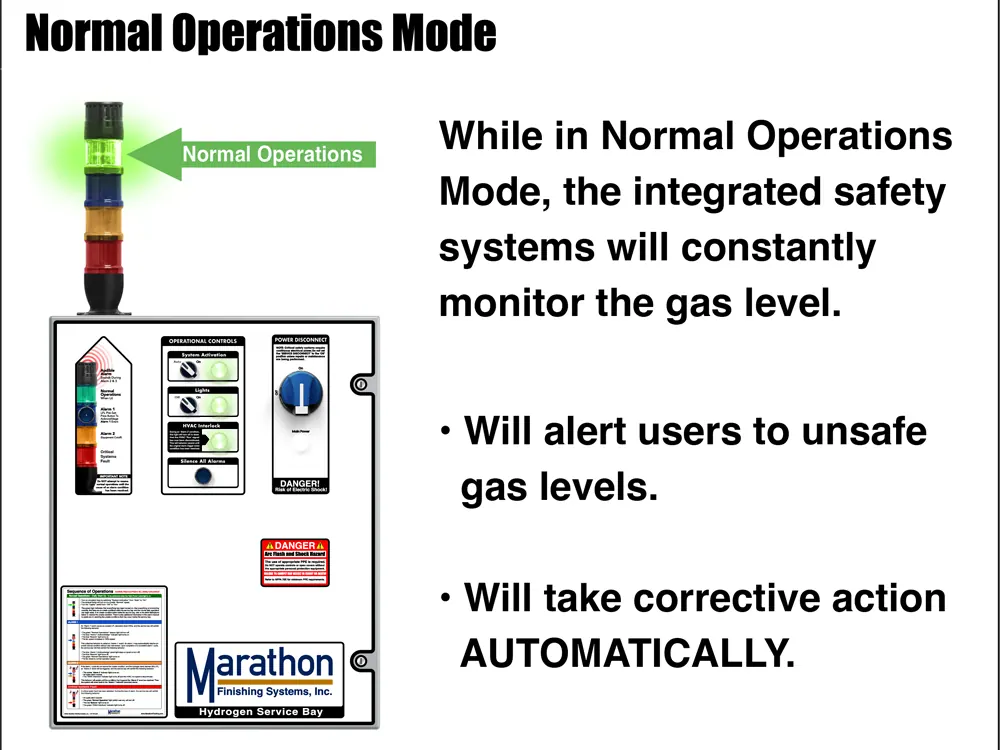
Our exclusive SMART control panel monitors and controls every aspect of the internal environment, as well as every component. Your safety is assured, and productivity is maintained at its highest level.
From first conversation to commissioned system — a transparent, four-step engagement.
We start by understanding your facility, your workflow, and your service goals.
Detailed models and engineered drawings tailored to your space and codes.
Built in our Temecula, California facility and prepared for safe transit.
On-site installation and commissioning by the Marathon installation team.
Specifications, dimensions, and configuration options for the Automotive FCEV Hydrogen Service Bay product line.
We're happy to help find the right solution for you. Find out today how quickly we can get you up and running.
Call Us at 310 791-5601Application Planning
A dealership bay needs to fit the service operation as carefully as it fits the car. Start with the manufacturer’s procedures, the work you intend to perform, and the surrounding shop.
Read the buyer’s guideIdentify the models you support, vehicle dimensions, hydrogen storage locations, and the procedures your technicians will perform. Include open doors, raised hoods, lift travel, and component removal space.
Share lift information, column locations, aisle widths, existing utilities, and ceiling obstructions. The enclosure, capture hood, detection, and exhaust must be coordinated with those conditions.
Discuss customer vehicle flow, neighboring service stalls, tool access, and any planned changes to the service program. Define how the completed bay will fit your facility’s training and alarm-response procedures.
A Clear Project Scope
A complete project connects the manufactured system to the building and the people using it. Confirm these responsibilities in your proposal and project documents.
Confirm the bay configuration, supplied components, engineering deliverables, and work assigned to each project partner.
Planning details →Coordinate building work, utilities, structural review, permits, access, unloading, and any local contractor work before delivery.
Planning details →Agree on the commissioning plan, documented safety responses, training, and records that will be provided at handover.
Planning details →Identify the responsible team, approved maintenance instructions, service records, and a process for reviewing future modifications.
Planning details →Speak with a specialist about your specific service bay requirements.